
Women's Health
Fibroids Without Surgery: Which Ones Ayurveda Can Manage
Not every uterine fibroid needs an operation. Dr. Amita Abrol explains which fibroids can be managed without surgery, how Ayurveda reads Garbhashaya Granthi, and what Elakizhi and Guggulu actually do — with clear rules for when surgery is safer.
- Published October 15, 2026
- 11 minutes read
- Medically reviewed
- By Dr. Amita Abrol

Personally supervised by Dr. Amita Abrol
Gold Medalist BAMS · MS Gynaecology & Obstetrics · 14+ years experience
Key takeaways
- Up to 70–80% of women develop fibroids in their lifetime, but many never need surgery.
- Size, location and symptoms decide the plan — not the word 'fibroid' alone.
- Ayurveda names fibroid-like growths Garbhashaya Granthi and targets Apana Vata, Kapha and Ama.
- Realistic Ayurvedic goals are often: stop growth, control bleeding and pain, and improve comfort — tracked with repeat ultrasound.
- Elakizhi helps pelvic pain and Vata balance, but is forbidden during heavy bleeding or active periods.
- Kanchanar, Shigru and Triphala Guggulu are classical internal scraping agents used under a doctor's supervision.
- Very large fibroids, severe anaemia or cavity-blocking growths still need a surgical opinion.
In This Article
- What Are Uterine Fibroids?
- Types of Fibroids by Location
- Fibroid Size Guide: Seed to Watermelon
- Common Fibroid Symptoms
- Myth vs Fact About Fibroids
- How Ayurveda Sees Fibroids (Garbhashaya Granthi)
- Why Fibroids Form: The Ayurvedic Chain
- Which Fibroids Can Be Managed Without Surgery?
- How Ayurveda Treats Fibroids Without Relying on Surgery Alone
- Role of Elakizhi in Uterine Fibroids
- The Role of Guggulu: Internal Scraping Agents
- Modern Care vs Ayurvedic Care: A Clear Comparison
- When You Should Still Choose Surgery
- What Results Are Realistic?
- Book a Consultation
- About the Author
- References
By Dr. Amita Abrol, BAMS (Gold Medalist), MS Gynaecology & Obstetrics · Ayurvedic Physician, Amritsar · Medically reviewed · Last updated: 15 October 2026
How this article was prepared: Written from Dr. Amita Abrol’s clinical notes on uterine fibroids (Garbhashaya Granthi), then medically reviewed for 2026. Claims about prevalence cite US HHS / NIH / JAMA sources below. Treatment advice is educational — your ultrasound, blood count and fertility plans decide the final pathway. Clinic care: fibroids treatment overview · author credentials.
Quick answer: Many uterine fibroids can be managed without surgery when they are small or medium, grow slowly, and mainly cause mild to moderate bleeding or pelvic heaviness. Ayurveda treats them as Garbhashaya Granthi — balancing Apana Vata and Kapha, clearing toxins, and using scraping medicines such as Kanchanar Guggulu. Very large fibroids, severe anaemia, or growths that block the uterine cavity still need a surgical opinion.
What Are Uterine Fibroids?
Uterine fibroids are non-cancerous (benign) growths of smooth muscle and fibrous tissue that form in or on the wall of the uterus. Doctors also call them leiomyomas or myomas.
They are the most common pelvic tumours in women of childbearing age. The US Office on Women’s Health estimates that 20% to 80% of women develop fibroids by age 50, though many never notice symptoms. A 2024 JAMA review puts lifetime prevalence in premenopausal women even higher in some screened groups.
Fibroids are hormone-dependent. Oestrogen and progesterone feed their growth. That is why they often enlarge in the reproductive years and tend to shrink after menopause.
If you want a clinic-level overview of care options at our hospital, see our Ayurvedic treatment page for uterine fibroids. This article answers a narrower question: which fibroids can safely be managed without surgery?
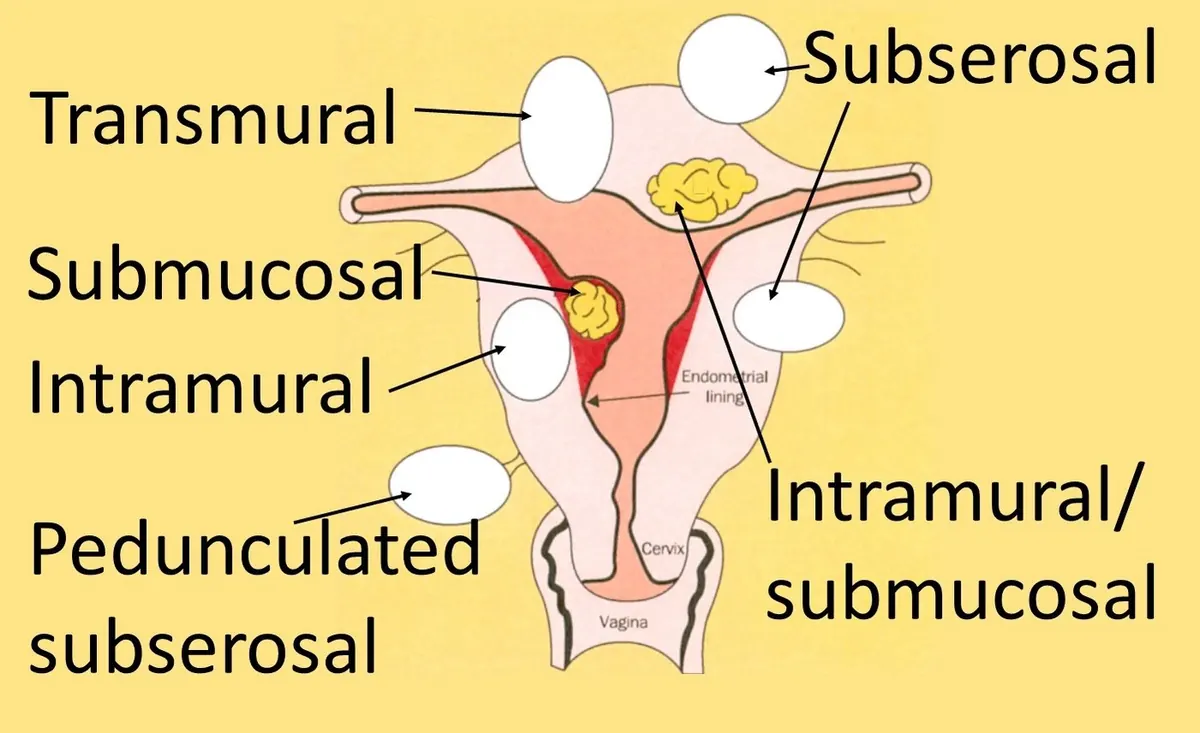
Types of Fibroids by Location
Fibroid type is named by where the growth sits. Location decides symptoms more than size alone — a small fibroid inside the cavity can bleed more than a larger one on the outer wall.
| Type | Where it grows | What women often feel |
|---|---|---|
| Intramural | Inside the muscular wall of the uterus | Heavier periods, cramps, bulkiness |
| Submucosal | Bulges into the inner cavity | Heavy bleeding, clots; may affect implantation |
| Subserosal | On the outer surface of the uterus | Pressure, bloating, bladder or bowel push |
| Pedunculated | Attached by a thin stalk | Sharp pain if the stalk twists |
Most women have no symptoms. When symptoms appear, they depend on size, number and location.
Fibroid Size Guide: Seed to Watermelon
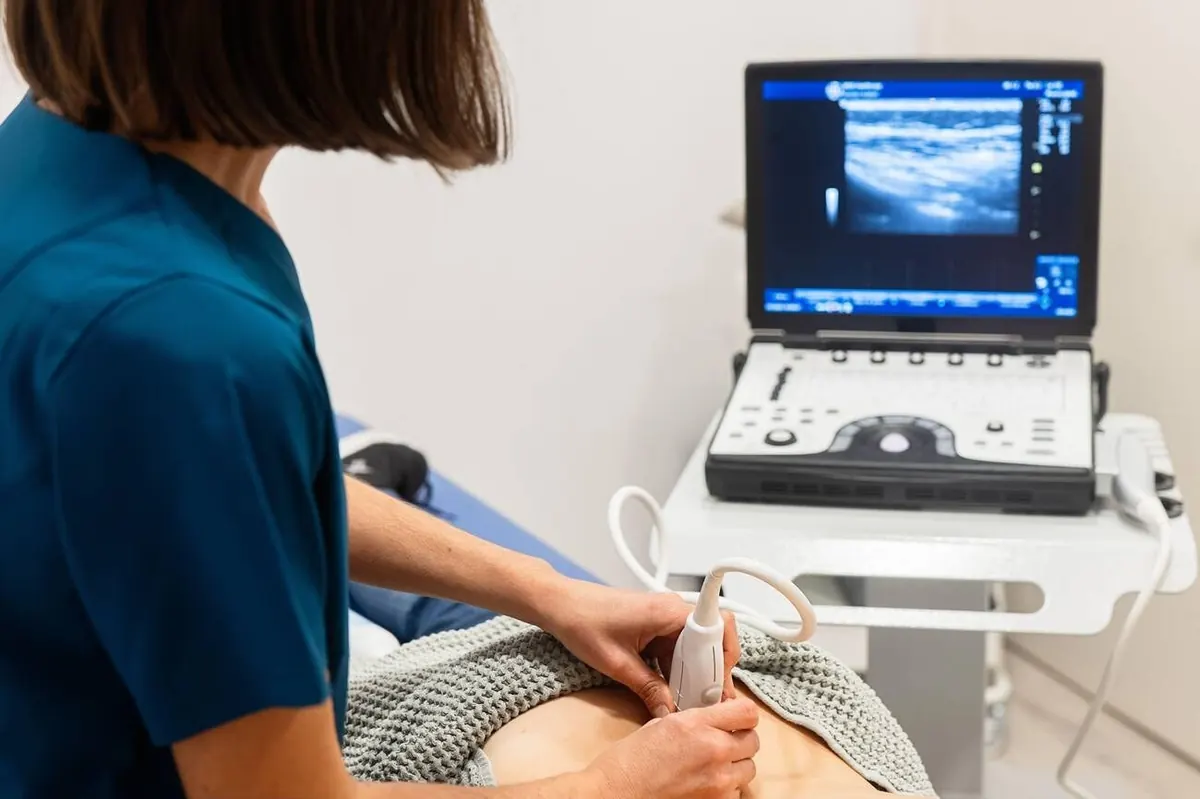
Fibroid size is measured on ultrasound in centimetres; in clinic we also use everyday comparisons from a seed (under 2 cm) to a melon (over 10 cm). This table is a practical guide, not a rigid rule for surgery.
| Size | Measurement | Everyday equivalent | Common approach |
|---|---|---|---|
| Small | Under 2 cm (20 mm) | Seed, marble or pea | Often asymptomatic; watchful waiting + prevention |
| Medium | 2 to 5 cm | Walnut, grape or plum | May cause cramps, bloating or heavier periods |
| Large | 5 to 10 cm | Lime, orange or grapefruit | Pelvic pressure and heavy bleeding more likely |
| Very large | Over 10 cm | Cantaloupe or watermelon | Visible bulge; surgery is often discussed |
Common Fibroid Symptoms
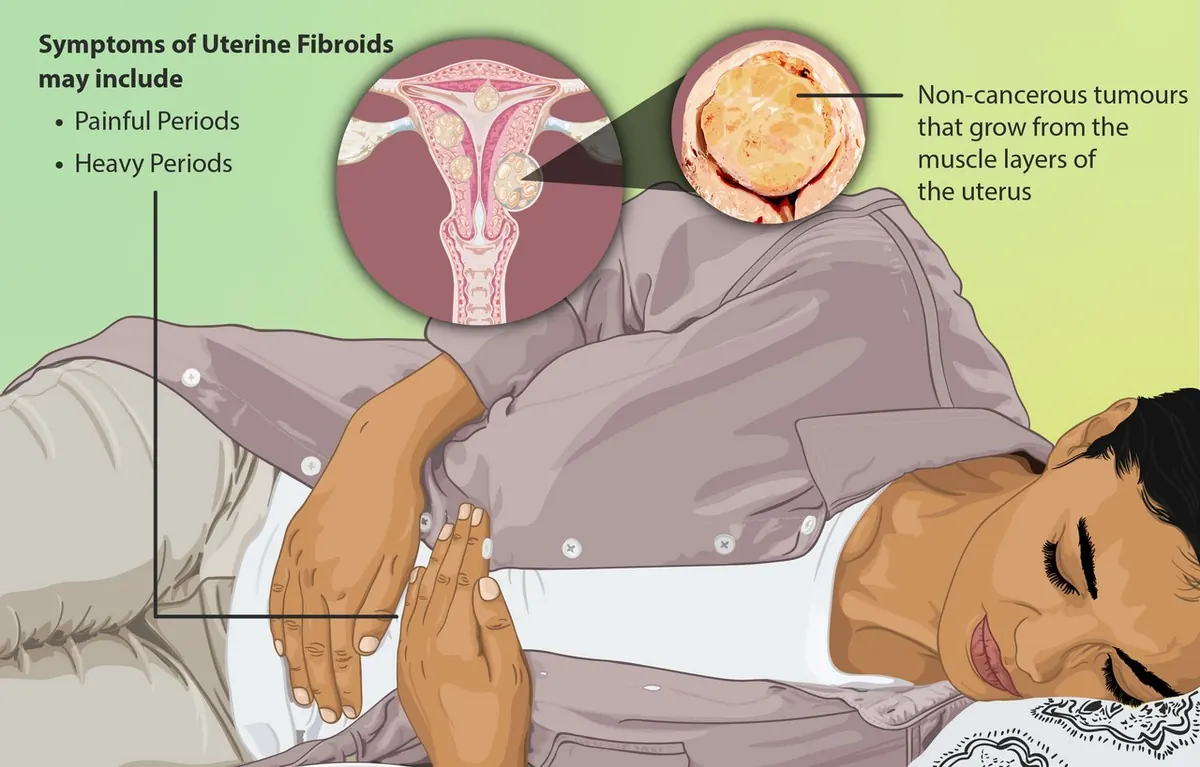
The most common symptoms are heavier or longer periods, pelvic heaviness, and pressure on the bladder or bowel. Pain during intercourse and anaemia from blood loss also appear often in clinic.
Changes in menstruation
- Menorrhagia — heavy menstrual bleeding, sometimes with large clots
- Periods lasting more than a week
- Severe pain during menses (dysmenorrhoea)
Pelvic pain and pressure
- Fullness, heaviness or bloating in the lower abdomen
- Abdomen size that looks larger than usual, sometimes mimicking early pregnancy
- Pain during intercourse (dyspareunia), sometimes with spotting
- Chronic pelvic pain or pressure
Other physical symptoms
- Fatigue and weakness
- Anaemia from ongoing blood loss
Heavy periods that leave you breathless, dizzy or unable to work are not “just a bad month.” Get a scan and a blood count. Related reading: understanding irregular periods and adenomyosis explained (a different condition that can feel similar).
Myth vs Fact About Fibroids
Most fibroid myths push women toward fear or toward surgery they may not need. Use this myth-versus-fact check before you decide.
| Myth | Fact |
|---|---|
| Every fibroid must be removed. | Many small, quiet fibroids only need monitoring and lifestyle plus medical care. |
| Fibroids always turn into cancer. | Fibroids are almost always benign. Malignant change is rare. |
| Ayurveda can dissolve any fibroid in weeks. | Honest goals are symptom control, slowed growth and better quality of life, checked on ultrasound. |
| Only hysterectomy fixes fibroids. | Options include medicines, myomectomy, interventional procedures and Ayurvedic plans — chosen by size, type and fertility wishes. |
| No symptoms means no problem forever. | Silent fibroids can still grow. Periodic scans help if you have risk factors or a family history. |
How Ayurveda Sees Fibroids (Garbhashaya Granthi)
In Ayurveda, fibroid-like uterine nodules are described as Garbhashaya Granthi — a localised, knotty, encapsulated swelling caused by disturbed doshas, mainly Vata and Kapha acting on blood and muscle tissue.
According to Acharya Sushruta, Granthi is a glandular, localised, knotty swelling from vitiation of the doshas (mainly Vata and Kapha) interacting with Rakta (blood), Mamsa (muscle) and Meda (fat tissue). This picture matches encapsulated intramural and subserosal fibroids closely.
Acharya Charaka links heavy, clotty menstrual bleeding to Asrigdara, and large pregnancy-like masses to Raktaja Gulma. Those descriptions often map to bigger subserosal fibroids that stretch the abdomen.
Why Fibroids Form: The Ayurvedic Chain
Ayurveda explains fibroids as a chain: weak digestion creates toxins, Apana Vata and Kapha rise, tissues of the uterus get disturbed, and reproductive channels get blocked into a hard overgrowth.
1. Agnimandya and Ama
Low digestive fire leaves undigested residue (Ama). Over time this sticky waste feeds abnormal tissue growth.
2. Dosha vitiation
Apana Vata (the downward-moving Vata that governs the pelvis and periods) and Kapha (structure and growth) become aggravated. The result is irregular uterine movement plus solid, heavy growth.
3. Dhatu dushti
The disturbed doshas carry toxins into uterine muscle (Mamsa) and uterine blood vessels (Rakta).
4. Srotorodha
Channels of the reproductive system get obstructed. A solid, layered, muscular overgrowth forms — the clinical Granthi.
Which Fibroids Can Be Managed Without Surgery?
Fibroids that are small or medium, stable on ultrasound, and cause mild to moderate symptoms are the best candidates for non-surgical Ayurvedic care. The plan is personalised after reports, not after a single symptom.
In modern medicine the common line is hormone therapy or myomectomy (and sometimes hysterectomy). Those options matter and save lives when anaemia is severe or fertility is blocked. Ayurveda sits beside them for women who want to preserve the uterus, reduce symptoms, and slow growth under scan review.
Good non-surgical candidates usually have:
- Small or medium fibroids (roughly under 5 cm), or larger ones that are stable
- Symptoms that affect life but are not emergencies
- No severe anaemia that needs urgent transfusion or surgery
- A wish to avoid or delay surgery, including for fertility
Surgery is more often discussed when fibroids are very large (over about 10 cm), grow quickly, distort the cavity (especially submucosal types affecting fertility), or cause dangerous blood loss. Read more on our Ayurvedic gynaecologist in Amritsar page if you want a second opinion pathway.
How Ayurveda Treats Fibroids Without Relying on Surgery Alone
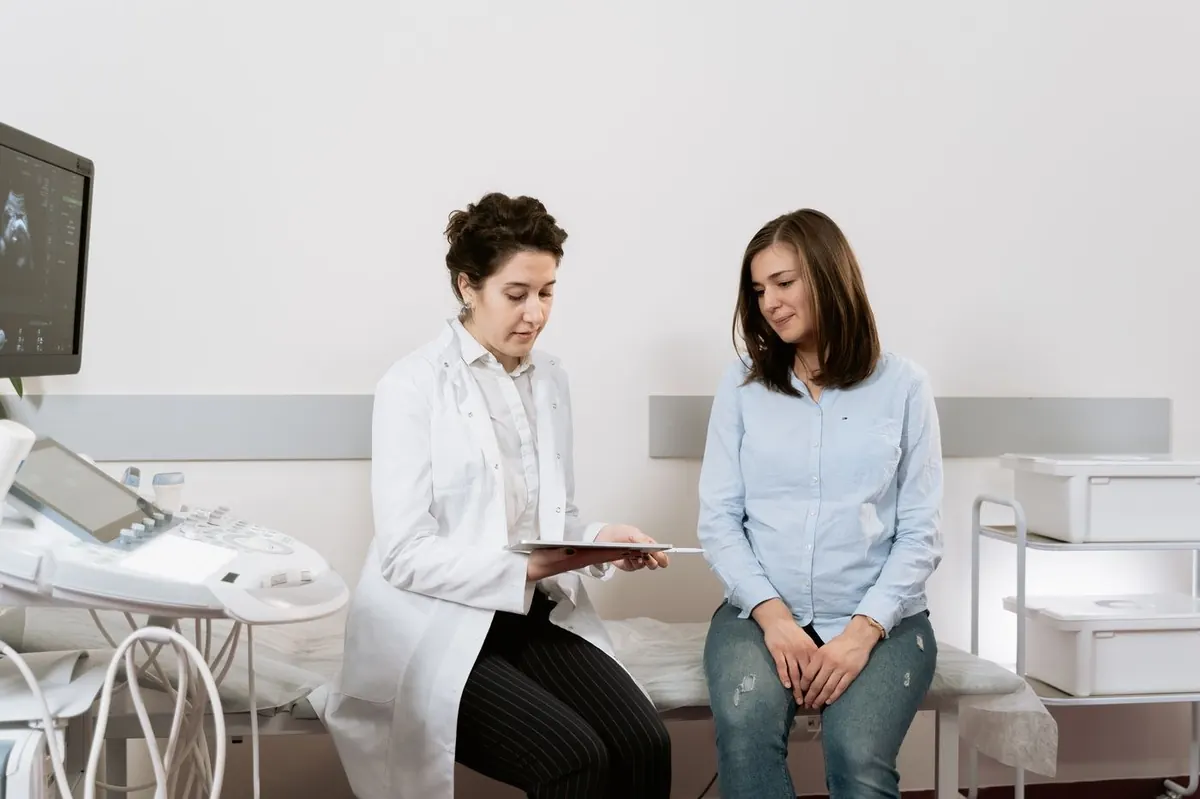
Ayurvedic fibroid care has three clinical aims: balance Apana Vata and Kapha, scrape the hard muscular mass (Lekhana), and regulate blood flow so periods are lighter and more stable.
Treatment is never only a bottle of tablets. A full plan may include diet for Agni, herbal Lekhana medicines, and selected Panchakarma therapies such as Basti or, when indicated, uterine therapies discussed on our Uttar Basti page. Progress is tracked with symptoms and repeat ultrasound.
Role of Elakizhi in Uterine Fibroids
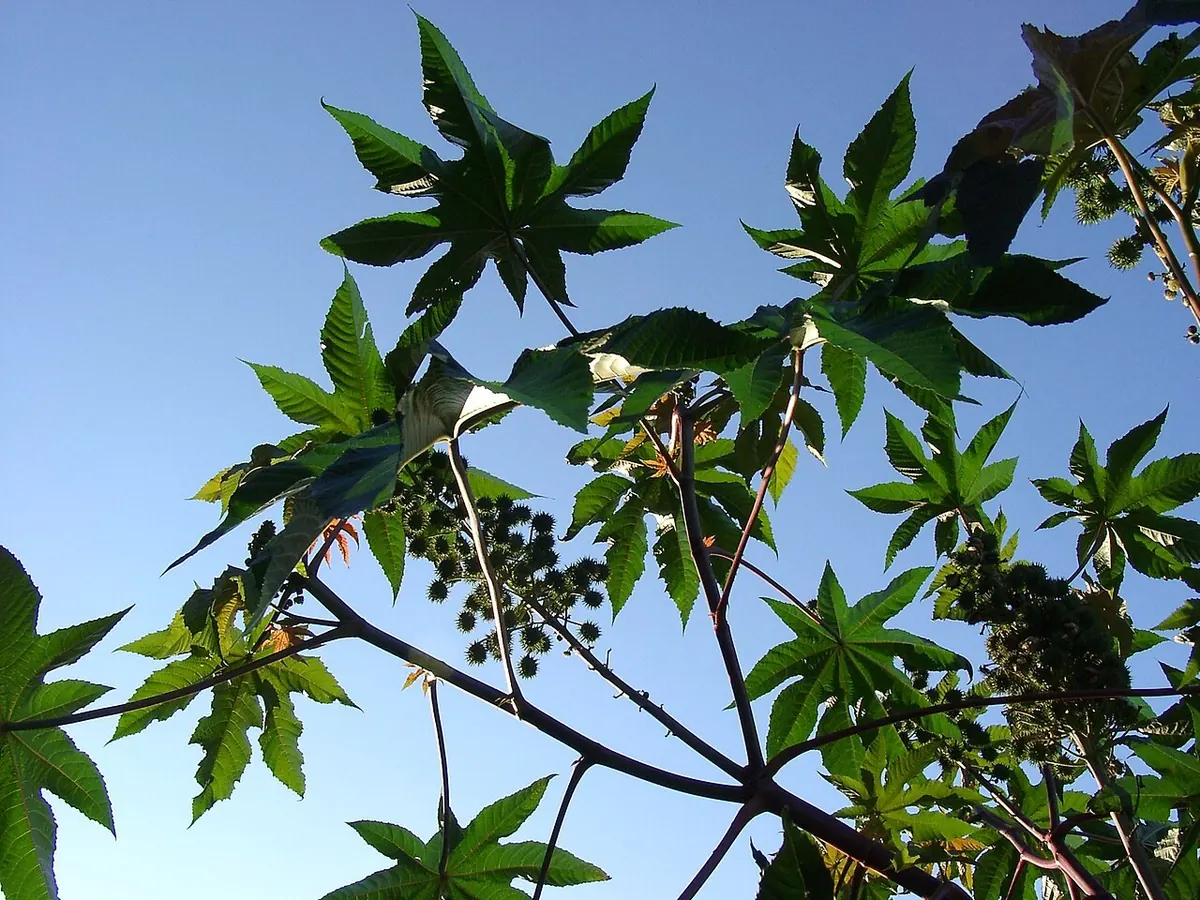
Elakizhi is a sweat-inducing Ayurvedic therapy where fresh medicinal leaves are chopped, fried in medicated oils, tied into cloth boluses (kizhis), and rhythmically massaged over the body or over the lower abdomen and lower back.
1. Regulates Apana Vata
Deep heat from medicated oils calms aggravated Apana Vata. Clinically this supports more regular uterine contractions and helps limit further fibroid proliferation driven by Vata–Kapha imbalance.
2. Relieves pelvic pain and heaviness
Warm oil heat relaxes smooth uterine muscle and eases dysmenorrhoea, backache, and the constant feeling of fullness or heaviness.
3. Improves blood circulation
Elakizhi dilates local vessels, helps move stagnant blood, and supports clearance of local toxins from the pelvic region.
Strict clinical contraindication: Elakizhi must never be performed during an active menstrual cycle or if a patient has heavy bleeding / menorrhagia (Asrigdara). Doing heat therapies in heavy bleeding can worsen blood loss.
The Role of Guggulu: Internal Scraping Agents
Guggulu (Commiphora mukul) is a purified resin prized for Lekhana (scraping) and Bhedana (breaking dense tissue) properties. In fibroid care it is used to scrape hard, glandular and muscular overgrowth under a doctor’s dose and duration.

| Formulation | Main clinical role in fibroids |
|---|---|
| Kanchanar Guggulu | Acts on glandular and muscular growths; classic choice for Granthi-type lesions |
| Shigru Guggulu | Clears obstruction in uterine vessels, reducing the “nutrition supply” to the fibroid |
| Triphala Guggulu | Removes Ama (toxins) and supports channel clearance |
These are not over-the-counter shortcuts. Dose, anupan (vehicle), and duration depend on your Prakriti, bleeding pattern and ultrasound findings. Self-medication with high-dose resins can upset digestion or interact with other drugs.
Modern Care vs Ayurvedic Care: A Clear Comparison
Modern care acts fast on hormones and anatomy; Ayurveda acts on digestion, doshas and tissue quality. Many women use both in sequence or together under shared follow-up.
| Modern line of care | Ayurvedic line of care | |
|---|---|---|
| Main tools | Hormone therapy, myomectomy, hysterectomy, UAE | Diet for Agni, Guggulu Lekhana, Elakizhi, Basti / Uttar Basti when fit |
| Best strength | Rapid control of severe bleeding; removing large masses | Symptom relief, growth control, whole-person recovery |
| Speed | Days to weeks for medicines; immediate for surgery | Weeks to months; ultrasound reviews guide the plan |
| Fertility focus | Myomectomy can preserve uterus when chosen well | Aims to keep uterus and improve cycle quality where safe |
| Limits | Side effects of hormones; surgical recovery and risks | Not a substitute for emergency surgery or severe anaemia care |
When You Should Still Choose Surgery
Choose a surgical opinion promptly if fibroids are very large, bleeding causes severe anaemia, growth is rapid, or fertility is blocked by a cavity-distorting fibroid your scans clearly show.
- Very large fibroids with visible abdominal bulging and organ pressure
- Soaking pads hourly, fainting, or haemoglobin that keeps falling
- Rapid increase in size on serial ultrasounds
- Submucosal fibroids clearly linked to recurrent pregnancy loss or failed implantation after work-up
- Suspicion of a rare malignant tumour (uncommon, but not ignorable)
Ayurveda can still support recovery after myomectomy — digestion, strength and cycle regulation — once your surgeon clears you for complementary care.
What Results Are Realistic?
Realistic results are lighter periods, less pelvic heaviness, better energy, and stable or slowly reducing size on ultrasound over months — not a guaranteed “zero fibroid” in two weeks.
In my practice, many women feel symptom relief within 6 to 12 weeks when they follow medicines, diet and therapy timing. Scan changes take longer. Women with PCOD, adenomyosis or thyroid imbalance need those conditions handled too — see Ayurvedic care for PCOD and hypothyroidism when reports look normal.
Book a Consultation
If you have a fibroid report and feel stuck between “wait and watch” and “remove the uterus,” bring your ultrasound and blood reports to a structured consult. We will map size, type and symptoms to a clear plan — including when surgery is the wiser path.
Book Consultation Online Consultation
Clinic: Dr. Abrol Ayurveda & Panchkarma Hospital, Amritsar · Phone / WhatsApp: +91-9878039127
About the Author
Dr. Amita Abrol is an Ayurvedic physician and Panchakarma specialist in Amritsar, Punjab. She holds a BAMS (Gold Medalist) and an MS in Gynaecology & Obstetrics (Stree Prasuti Tantra). She personally reviews fibroid, adenomyosis, PCOD and fertility cases with internal medicines, diet plans and classical therapies, and consults patients in India and abroad through online consultations.
Experience signal: MS in Stree Prasuti Tantra + 14+ years of supervised Panchakarma practice. Contact and address are listed in the site footer for trust verification.
References
- Office on Women’s Health (US HHS). Uterine fibroids — prevalence and symptoms overview (page updated 2025).
- NIH DiscoverWHR. Uterine fibroids research overview.
- JAMA. Uterine Fibroids — 2024 clinical review (lifetime prevalence discussion).
- Sushruta Samhita — Granthi Nidana (Garbhashaya Granthi).
- Charaka Samhita — references to Asrigdara and Gulma.
Images: free stock under the Pexels License; educational diagrams and botanical photos from Wikimedia Commons (CC BY-SA). Used for education; not clinical photographs of patients at this hospital.
Medical disclaimer (YMYL): This article is for education and does not replace an individual consultation, ultrasound review or surgical opinion. Never stop or change prescribed medicine without speaking to your doctor. Heavy bleeding with dizziness, fainting, or soaking a pad every hour needs urgent medical care.
Have questions about your own symptoms?
Every case is different. Book a consultation with Dr. Abrol for a treatment plan personalised to your Prakriti and health history.
In This Article
- What Are Uterine Fibroids?
- Types of Fibroids by Location
- Fibroid Size Guide: Seed to Watermelon
- Common Fibroid Symptoms
- Myth vs Fact About Fibroids
- How Ayurveda Sees Fibroids (Garbhashaya Granthi)
- Why Fibroids Form: The Ayurvedic Chain
- Which Fibroids Can Be Managed Without Surgery?
- How Ayurveda Treats Fibroids Without Relying on Surgery Alone
- Role of Elakizhi in Uterine Fibroids
- The Role of Guggulu: Internal Scraping Agents
- Modern Care vs Ayurvedic Care: A Clear Comparison
- When You Should Still Choose Surgery
- What Results Are Realistic?
- Book a Consultation
- About the Author
- References
Book a Consultation
Get a personalised Ayurvedic treatment plan from Dr. Abrol - in clinic or online.
Dr. Amita Abrol
Gold Medalist BAMS, MS Gynaecology
Common Questions
Frequently Asked Questions
Some small and medium fibroids stay stable or shrink slowly, especially as hormones fall after menopause. Ayurveda aims to stop further growth, calm bleeding and pain, and support tissue scraping with supervised medicines. Size change should be checked on ultrasound, not guessed from how you feel alone.
Small fibroids under about 2 cm and many medium fibroids between 2 and 5 cm with mild or moderate symptoms are often good candidates for watchful waiting plus Ayurvedic care. Submucosal fibroids that distort the cavity, very large fibroids over about 10 cm, or cases with severe anaemia usually need a gynaecology surgical opinion.
Elakizhi is a warm medicinal-leaf poultice massage. For fibroids it is used to calm Apana Vata, ease pelvic heaviness and backache, and improve local blood flow. It must never be done during an active period or heavy bleeding.
Doctors often use Guggulu formulations for their Lekhana (scraping) action — especially Kanchanar Guggulu for glandular and muscular growths, Shigru Guggulu to clear vessel obstruction, and Triphala Guggulu to clear Ama. These are prescription plans, not self-bought cures.
Almost all uterine fibroids are benign. Cancerous change is rare. Rapid growth, unexplained weight loss, or new symptoms after menopause should be checked promptly by a doctor.
Many women notice symptom relief in 6 to 12 weeks. Meaningful change on ultrasound, if it occurs, usually takes several months. Duration depends on size, number, location and how long symptoms have been present.
Often yes, but only after both your gynaecologist and Ayurvedic doctor know the full list of medicines and reports. Never stop prescribed hormones on your own.
Continue Exploring
Related Treatments & Conditions
Keep Reading
More on Women's Health

Ready to Start Your Ayurvedic Healing Journey?
Book a clinic visit or online consultation with Dr. Abrol, based on what you've just read.