Ayurvedic Lifestyle
How to Choose an Ayurvedic Doctor: BAMS Degree, Registration and Red Flags
A BAMS degree takes five and a half years, and every practising Ayurvedic doctor must be registered. Dr. Amita Abrol explains how to check a doctor's registration, what to ask at the first visit, and the warning signs that should make you walk away.
- Published November 16, 2026
- 9 minutes read
- Medically reviewed
- By Dr. Amita Abrol

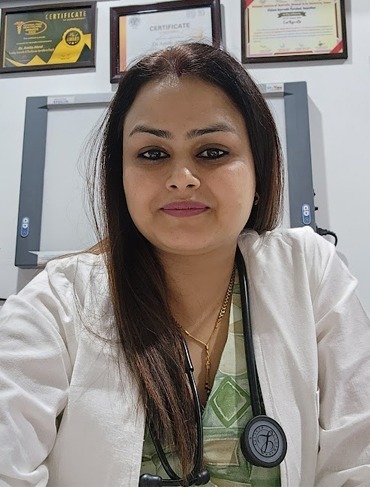
Personally supervised by Dr. Amita Abrol
Gold Medalist BAMS · MS Gynaecology & Obstetrics · 14+ years experience
Key takeaways
- BAMS means Bachelor of Ayurvedic Medicine and Surgery, a 5.5-year course with a one-year internship.
- Every practising Ayurvedic doctor must be registered, and the number must be on prescriptions and receipts.
- In Punjab, Ayurvedic doctors register with the Board of Ayurvedic and Unani Systems of Medicine.
- A BAMS doctor may legally use "Dr." but is trained in Ayurveda, not in modern emergency care.
- A good Ayurvedic doctor reads your reports, names every medicine and gives a realistic timeline.
- Walk away from anyone who promises a cure, sells unlabelled powders or tells you to stop your regular medicines.
- Buy labelled medicines from licensed makers: a JAMA study found metals in 1 in 5 products sold online.
In This Article
- What Is a BAMS Doctor?
- Is a BAMS Doctor a Real Doctor?
- How to Check an Ayurvedic Doctor's Registration
- What Makes a Good Ayurvedic Doctor?
- Questions to Ask at Your First Ayurvedic Consultation
- Red Flags: Signs of a Fake or Careless Ayurvedic Doctor
- Are Ayurvedic Medicines Safe? Check What You Are Prescribed
- A Typical Case We See in Clinic
- Choosing an Ayurvedic Doctor in Amritsar
- Book Your Ayurvedic Consultation
- About the Author
- References
By Dr. Amita Abrol, BAMS (Gold Medalist), MS · Ayurvedic Physician & Panchakarma Specialist, Amritsar · Medically reviewed · Last updated: 16 November 2026
How this article was prepared: Written by Dr. Amita Abrol from the questions patients ask us before their first visit, and checked against the NCISM education and ethics regulations, the national Ayush survey and published research on medicine safety. Every number links to its source below.
The rules described are for India; other countries have their own. Author credentials: Dr. Amita Abrol.
Quick answer: To choose an Ayurvedic doctor, check two things first: a BAMS degree (or MD/MS in Ayurveda) and a valid registration with the state board. The registration number must be printed on prescriptions and receipts. Then look for a doctor who takes a full history, reads your reports, names every medicine and never asks you to stop your regular medicines.
Ayurveda is now part of daily health care in India. In a national survey, about 46% of people in villages and 53% in cities used an Ayush system (Ayurveda, Yoga, Unani, Siddha, Sowa-Rigpa or Homoeopathy) in one year. Ayurveda was the one used most (NSSO, 2024).
With so many people looking, it pays to know what a trained Ayurvedic doctor looks like.
In our clinic in Amritsar, we often meet patients who have spent months on powders with no label and no plan. This guide shows you how to check a doctor before you hand over your health.
What Is a BAMS Doctor?
A BAMS doctor is a graduate of Bachelor of Ayurvedic Medicine and Surgery, a five-and-a-half-year degree in Ayurveda. The degree is also called Ayurvedacharya (master of Ayurveda). After passing, the doctor must register with a state board before treating patients.
The national rules fix the length of the course. There are three study years of 18 months each. Then comes a 12-month internship in a hospital (NCISM, 2022).
Students learn the old Ayurvedic texts. They also learn how the body is built and how it works, and the basics of surgery and childbirth.
Some doctors go on to study further. MD (Ayurveda) covers subjects such as Kayachikitsa (general medicine) and Panchakarma. MS (Ayurveda) covers subjects such as Stree Prasuti Tantra (women’s health and childbirth).
Such a doctor is a good choice for a hard problem in that one field.
Is a BAMS Doctor a Real Doctor?
Yes. A registered BAMS graduate is a qualified doctor of Ayurveda and may legally use the title “Dr.” or “Vaidya” (the traditional word for a physician). But a BAMS doctor is not the same as an MBBS doctor.
Each is trained in a different system of medicine. The NCISM rules say a doctor on the register may put “Doctor” or “Vaidya” before their name.
The same rules limit practice “to the extent of his qualification” (NCISM, 2023). In plain words, a BAMS doctor should treat you with Ayurveda.
The table below shows how the two degrees compare.
| Point | BAMS | MBBS |
|---|---|---|
| Full name | Bachelor of Ayurvedic Medicine and Surgery | Bachelor of Medicine, Bachelor of Surgery |
| System taught | Ayurveda, with basic modern sciences | Modern (allopathic) medicine |
| Course length | 5.5 years, including a 1-year internship | 5.5 years, including a 1-year internship |
| National regulator | NCISM | National Medical Commission (NMC) |
| Main strength | Long-term problems, diet, routine, Panchakarma | Emergencies, surgery, acute infections |
The two systems can work side by side. Many of our patients see a modern doctor for tests and an Ayurvedic doctor for long-term care.
When to go to a hospital first
Some problems need a hospital before any Ayurvedic clinic. Go straight to emergency care for:
- Chest pain, breathlessness or fainting
- Sudden weakness of one side of the body, or slurred speech
- Heavy bleeding, or bleeding in pregnancy
- High fever with a stiff neck, confusion or a rash
- A serious injury, burn or poisoning
How to Check an Ayurvedic Doctor's Registration
Ask the doctor for their registration number, check that it is printed on your prescription, and confirm it with the state board. The rules require the number on every prescription, certificate and money receipt. A doctor with nothing to hide will share it at once.
Step 1: Look at the prescription and the clinic wall
The NCISM rules say every practitioner must display the registration certificate in the clinic. The registration number must appear “in all his prescriptions, certificates, and money receipts” (NCISM, 2023). If your prescription has no number, ask why.
Step 2: Check with the state board
Each state keeps its own register of Ayurvedic doctors. In Punjab, doctors register with the Board of Ayurvedic and Unani Systems of Medicine, under the Punjab Ayurvedic and Unani Practitioners Act, 1963. Call or write to the board with the doctor’s name and number, and ask if the registration is current.
Step 3: Know about the national number
NCISM keeps a National Register, linked to the state lists. A doctor on it gets a national number that is not the same as the state number (NCISM, 2023).
So do not worry if you see two numbers. Both are normal.
Patients who live abroad can still check. Ask for both numbers before an online Ayurvedic consultation, the same way you would before a clinic visit.
What Makes a Good Ayurvedic Doctor?
A good Ayurvedic doctor has clear knowledge, real clinical experience, careful hands and honest habits. These are the four qualities of a physician listed in Charaka Samhita (Sutra Sthana 9/6), and they still hold today.
- Clear knowledge (shrute paryavadatatvam): a sound grasp of the texts and of modern basics.
- Wide experience (bahusho drishtakarmata): has seen many patients with problems like yours.
- Skill (dakshyam): careful, alert and practical in treatment.
- Purity (shaucham): clean in body, mind and dealings.
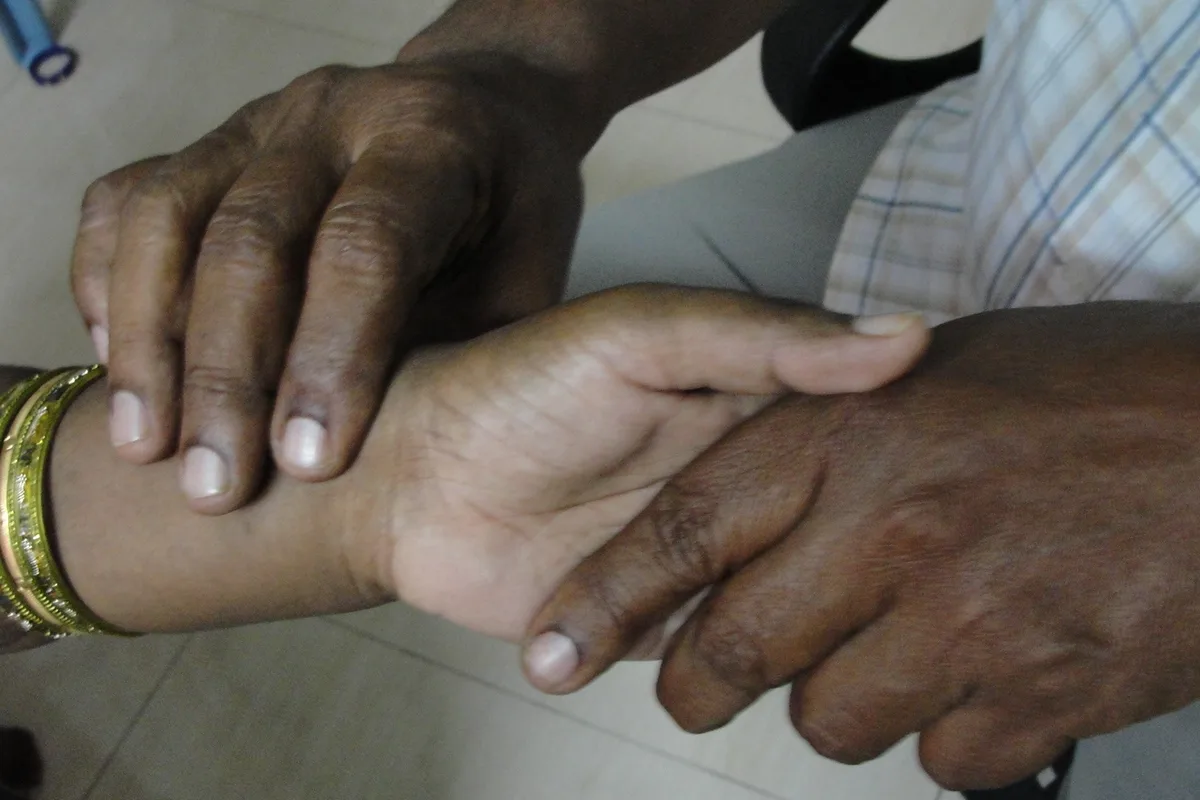
In practice, you can see these qualities in the first visit. The doctor asks about your food, sleep, bowels, periods and stress, not just the main complaint. They feel your pulse in a Nadi Pariksha, look at your tongue, and read your blood tests and scans.
A good doctor also explains the plan in words you understand. You should leave knowing what each medicine is, how long to take it, and when to come back. If a problem needs a scan, a surgeon or a modern doctor, a careful Ayurvedic doctor says so.
Questions to Ask at Your First Ayurvedic Consultation
Seven short questions will tell you most of what you need to know about an Ayurvedic doctor. Write them down and take them with you. A good doctor welcomes them.
- What is your qualification, and what is your registration number?
- What do you think is causing my problem, in Ayurvedic and in plain terms?
- What is the name of each medicine, and what does it contain?
- How long before I should expect a change, and what if nothing changes?
- Can I keep taking my thyroid, sugar or blood pressure tablets?
- Do I need any tests before or during treatment?
- What will the full treatment cost?
The last question matters more than people think. The NCISM rules say a doctor should tell you the fee before the service, not after. Knowing the cost up front saves you from surprise packages later.
Red Flags: Signs of a Fake or Careless Ayurvedic Doctor
Walk away from anyone who promises a cure, gives unlabelled medicine, or asks you to stop your regular medicines. These are the most common warning signs we hear about from new patients in Amritsar.
- Cure guarantees. No honest doctor can promise a cure for diabetes, psoriasis or thyroid disease. The NCISM rules treat boasting of cures as misconduct.
- Unlabelled powders or “secret” medicine. You have a right to know what you swallow.
- “Stop your English medicines.” Stopping insulin, thyroid or epilepsy tablets suddenly can be dangerous.
- No registration number on the prescription or receipt.
- Big package sold on day one, before any history or examination.
- Very fast results for an old problem. Ask what is in the medicine.
The table below clears up some common beliefs we hear at the reception desk.
| Myth | Fact |
|---|---|
| Ayurvedic medicines are natural, so they are always harmless. | Some contain metals or strong herbs. They need the right dose, a clean source and a doctor’s supervision. |
| A family vaid (traditional healer) without a degree is just as good. | Only a registered practitioner may practise. Experience matters, but so do training and accountability. |
| If it works fast, it must be strong Ayurveda. | Long-standing problems usually change over weeks or months. Very fast results deserve a question. |
| You must stop allopathic medicine to start Ayurveda. | Most patients use both. A careful doctor plans around your current medicines. |
| An online consultation can’t be trusted. | It can be, if the doctor is registered, reads your reports and writes a named prescription. |
Are Ayurvedic Medicines Safe? Check What You Are Prescribed
Ayurvedic medicines are safe when they come from a licensed maker, carry a full label, and are prescribed by name in the right dose. Problems start with unlabelled mixes, unknown online sellers and self-medication.
The research is a useful warning. A study in JAMA tested 193 Ayurvedic medicines bought online and found lead, mercury or arsenic in 20.7% of them (Saper et al., 2008). Products made with metals and minerals (rasa shastra) were affected more often: 40.6%, compared with 17.1% of the others.
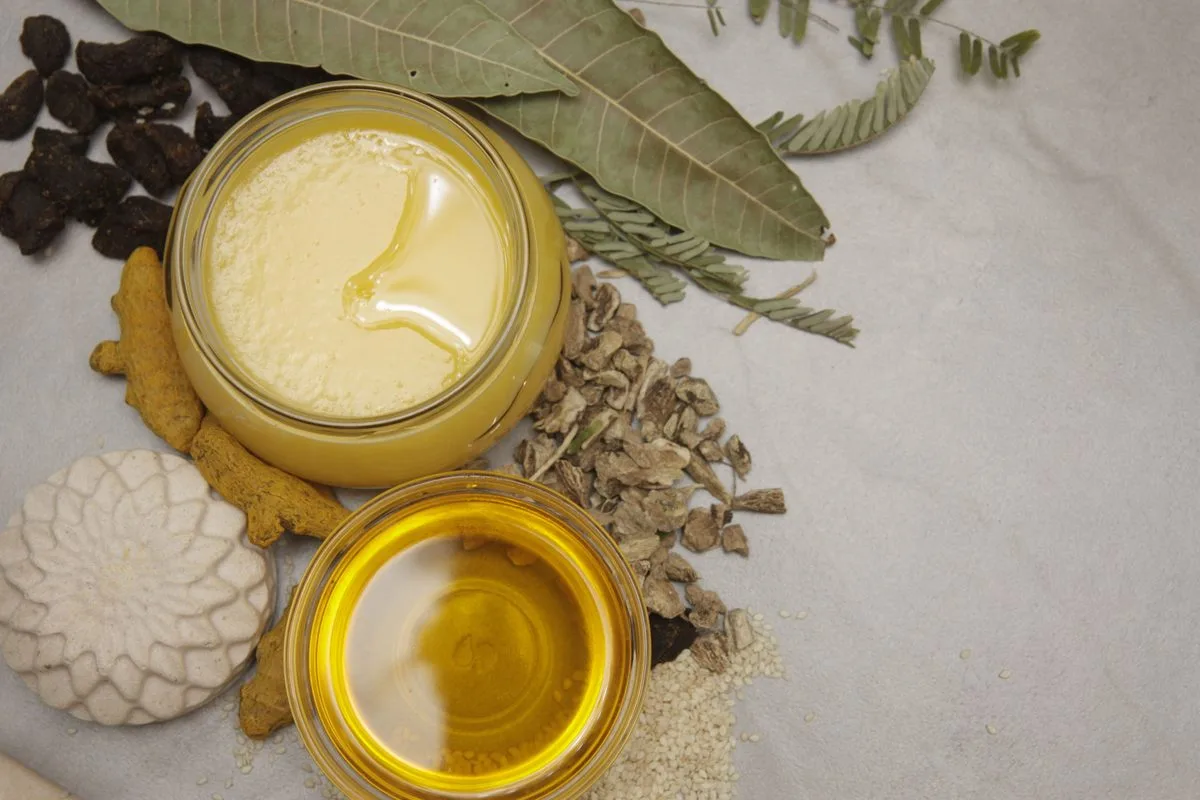
One more number stands out. Of the products with metals in them, 75% claimed Good Manufacturing Practices on the label. So a printed claim is not enough. Here is what we tell our patients:
- Buy only sealed packs with the maker’s name, batch number, licence number and expiry date.
- Take metal-based (bhasma) medicines only under a doctor, for a set period.
- Ask for liver and kidney tests if you will take strong medicines for months.
- Do not buy medicines from social media or doorstep sellers.
Who should take extra care
Some people need a doctor’s advice before any Ayurvedic medicine, even a mild one. Tell the doctor at the start if you are pregnant or breastfeeding, if the patient is a child, or if you have kidney or liver disease. Also mention blood thinners, epilepsy tablets, insulin or any planned surgery.
Single herbs need the same care. Our guide on whether ashwagandha is safe shows how one popular herb can suit one person and not another.
A Typical Case We See in Clinic
Many first visits in our clinic start with a bag of unlabelled powders and no records. Here is a composite example drawn from many similar cases (details changed for privacy).
A 29-year-old woman came to us with PCOD. For eight months she had taken three powders from a local “vaid” (traditional healer) who had no board registration and gave no prescription.
Her periods were still irregular, and she had gained weight. She did not know what she was taking.
We started with her history, a pelvic scan and blood tests, including liver function. Her reports were within range, so we stopped the unknown powders and began labelled medicines, a diet plan suited to Punjabi meals, and a walking routine.
We explained each medicine by name. Over four months her cycles became more regular. Results differ from person to person, and PCOD needs patience, but knowing what she was taking gave her confidence.
Read more about our approach to PCOD treatment.
Choosing an Ayurvedic Doctor in Amritsar
In Amritsar, use the same checks: degree, Punjab board registration, a proper history and examination, and a named prescription. Then think about what you need most: a general physician, a specialist, or a centre for Panchakarma therapies.
If you are comparing clinics for therapies, our guide to Panchakarma centres in Amritsar compares the main centres in the city. For a list of every condition and therapy we offer, see our Ayurvedic treatment page. To meet an Ayurvedic doctor in Amritsar who will answer all seven questions above, you are welcome to visit us.
Book Your Ayurvedic Consultation
If you want a doctor who explains every step, Dr. Amita Abrol will take your full history, read your reports and give you a written plan with each medicine named. Bring your list of current medicines and any old prescriptions.
You can visit our hospital in Amritsar or consult from anywhere by video call.
Book a Clinic Visit in Amritsar Consult Online
Clinic: Dr. Abrol Ayurveda & Panchkarma Hospital, Amritsar · Phone / WhatsApp: +91-9878039127
About the Author
Dr. Amita Abrol is an Ayurvedic physician and Panchakarma specialist in Amritsar, Punjab. She holds a BAMS (Gold Medalist) and an MS in Gynaecology & Obstetrics (Stree Prasuti Tantra). She sees patients with women’s health, skin, joint and digestive problems at the clinic and through online consultations, and many of them come after a bad experience elsewhere.
Experience: 14+ years of supervised Panchakarma practice. Clinic address and phone are listed in the site footer.
References
- National Commission for Indian System of Medicine. Minimum Standards of Undergraduate Ayurveda Education Regulations, 2022, regulation 6 (duration of BAMS). Gazette of India, 16 February 2022.
- National Commission for Indian System of Medicine. Ethics and Registration Regulations, 2023, regulations 3, 16, 19, 22 and 27.
- National Sample Survey Office, Ministry of Statistics and Programme Implementation. Press note: Survey on Ayush, July 2022 to June 2023, 13 June 2024.
- Saper RB, Phillips RS, Sehgal A, et al. Lead, mercury, and arsenic in US- and Indian-manufactured Ayurvedic medicines sold via the Internet. JAMA, 2008;300(8):915–923.
- Charaka Samhita, Sutra Sthana, Chapter 9 (Khuddakachatushpada Adhyaya), verse 6. Charak Samhita online edition.
- Punjab Ayurvedic and Unani Practitioners Act, 1963.
Images: “Pulse evaluation” by Thamizhpparithi Maari, CC BY-SA 3.0 (Wikimedia Commons, cropped and resized). Consultation and medicines photos: Dr. Abrol Ayurveda website image library. Used for education; not photographs of patients at this hospital.
Medical disclaimer: This article is for education and does not replace a consultation with your doctor. Do not stop or change prescribed medicine on your own. Chest pain, breathlessness, fainting, heavy bleeding or a high fever needs emergency care at a hospital.
Have questions about your own symptoms?
Every case is different. Book a consultation with Dr. Abrol for a treatment plan personalised to your Prakriti and health history.
In This Article
- What Is a BAMS Doctor?
- Is a BAMS Doctor a Real Doctor?
- How to Check an Ayurvedic Doctor's Registration
- What Makes a Good Ayurvedic Doctor?
- Questions to Ask at Your First Ayurvedic Consultation
- Red Flags: Signs of a Fake or Careless Ayurvedic Doctor
- Are Ayurvedic Medicines Safe? Check What You Are Prescribed
- A Typical Case We See in Clinic
- Choosing an Ayurvedic Doctor in Amritsar
- Book Your Ayurvedic Consultation
- About the Author
- References
Book a Consultation
Get a personalised Ayurvedic treatment plan from Dr. Abrol - in clinic or online.
Dr. Amita Abrol
Gold Medalist BAMS, MS Gynaecology
Common Questions
Frequently Asked Questions
Yes. Under the NCISM ethics and registration rules, a practitioner on the state or national register may use the prefix "Doctor" (Dr.) or "Vaidya" (Vd.). The title is linked to registration, so someone who is not registered should not use it. If in doubt, ask for the registration number.
A BAMS doctor is trained and registered to practise Ayurveda. A few states allow limited use of some modern medicines in set situations, and the rules differ from state to state. If an Ayurvedic doctor hands you allopathic tablets, ask what each one is and why, and keep the written prescription.
BAMS is the basic degree that lets a doctor register and practise Ayurveda. MD (Ayurveda) or MS (Ayurveda) is a postgraduate degree in one subject, such as Kayachikitsa (general medicine), Panchakarma or Stree Prasuti Tantra (gynaecology and obstetrics). A postgraduate is useful for complex, long-standing problems in that field.
Mild, recent problems often show change within four to eight weeks. Long-standing problems such as PCOD, psoriasis or knee arthritis usually need three to six months. A good doctor tells you the expected timeline at the first visit and reviews it at each follow-up.
Be careful. A 2008 study in JAMA found lead, mercury or arsenic in about 1 in 5 Ayurvedic medicines bought online. Buy only sealed, labelled products from licensed makers, with a batch number and expiry date, and only what your doctor has prescribed by name.
No. Do not stop or change any prescribed medicine on your own, especially for thyroid, diabetes, blood pressure, epilepsy or heart disease. A careful Ayurvedic doctor plans around your current medicines and asks you to talk to the prescribing doctor before any change.
Continue Exploring
Related Treatments & Conditions
Keep Reading
More on Ayurvedic Lifestyle
Ayurvedic Lifestyle
Read Article
Psoriasis Diet: Foods to Eat and Avoid, Explained by an Ayurvedic Doctor
Ready to Start Your Ayurvedic Healing Journey?
Book a clinic visit or online consultation with Dr. Abrol, based on what you've just read.